
What it's like to live in Rome during an aerospace engineering exchange: accommodation and routine
.jpg)
Before making any decision about an international program, the question that comes up most among parents is a practical one: what will my child's routine be like there? Where will he sleep? Who takes care of him? What happens outside of class?
These are legitimate questions, and they deserve direct answers. This article details how the accommodation works and the daily routine of the young people who participate of the aerospace engineering exchange in Rome, from the residential structure to leisure time, meals and 24-hour support.
Where do young people stay during the exchange in Rome?
The program is exclusively residential. There is no version with a return home at the end of the day. Participants are accommodated in a university residence in the center of Rome for the two weeks of the program, from July 19 to August 1, 2026.
The structure of the residence includes:
- Single rooms with private bathroom
- Kitchenette equipped in each room
- TV rooms and shared play areas
- Areas of study
- Gym and sports spaces
- Terraces and common areas
- House parents present at night
The location in the city center is not a comfort detail. It puts young people in direct contact with one of the most historic cities in the world, which complements technical training with a cultural dimension that no laboratory can offer.
How does the participants' daily routine work?
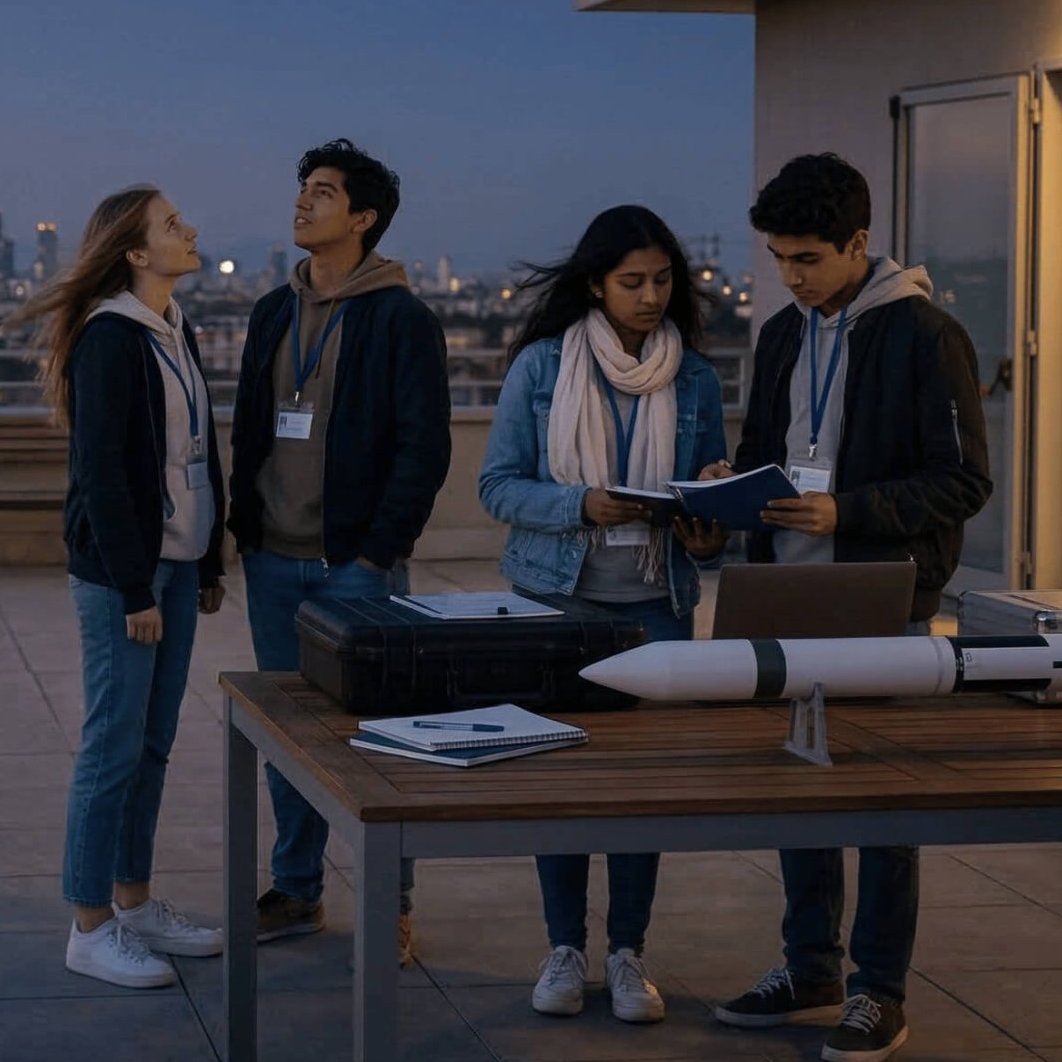
The structure of a typical day combines intense academic activities in the morning and early afternoon, with space for excursions and evening activities the rest of the day.
How is the morning part?
The day starts at 7:30am, with breakfast at 8:30am. The first academic activities begin at 10 am with classes at the laboratories of the Sapienza University of Rome. The program includes 30 hours of classes and laboratories distributed over two weeks, with two morning sessions separated by an interval at 11:15 a.m.
Lunch takes place at 12:45 and soon after the young people return for practical laboratory activities.
What happens in the afternoons and evenings?
Laboratory activities continue until late afternoon. Starting at 17:00, young people have time for excursions or cultural activities, followed by dinner at 19:00. The period from 8 pm to 10:30pm is dedicated to evening activities organized by the program.
The bedtime is at 23:00. The presence of the house parents at night ensures that the rest structure is respected.
On the day of the excursions, which include visits such as a visit to the aerospace company and the launch of the rocket in Rovigo, the day's schedule is adjusted to accommodate travel.
What are the meals included in the program?
The plan is full board: breakfast, lunch and dinner are all included. Young people don't have to worry about organizing food or extra food expenses during the program.
This has an important practical impact for parents: in addition to simplified logistics, young people are on a stable and supervised diet throughout their stay, which reduces health and well-being variables that would be difficult to control in other accommodation formats.
How do support and security work during the program?
The Be Easy team is available 24 hours a day, 7 days a week, for the entire duration of the program. For parents sending their child abroad for the first time, this is one of the most relevant points in the structure.
The bracket covers:
- Accompaniment on external trips, including company visits and cultural excursions
- Presence of house parents at the residence during the night
- Team of monitors during academic and leisure activities
- Full travel insurance included in the package
There are no autonomous trips. When the young people leave the residence for any activity in the program, they go as a group, with direct support from the team.
What do young people do besides engineering classes?
The program in Rome isn't just about rockets and Arduino. The cultural dimension is part of the official structure, with days dedicated to city tours.
Rome offers a context that goes beyond tourism. For a young man studying engineering in laboratories founded in 1926, walking through the Colosseum, the Trevi Fountain, and the Pantheon adds a historical perspective on civilization, construction, and engineering that you would hardly find anywhere else.
Cultural activities include:
- Visit to the Colosseum in Rome
- Exploring the city's historic sights: Pantheon, Trevi Fountain, and others
- Evening activities organized by the program
- Interaction with young people from other countries participating in the same residential program
Living with teenagers from different countries for two weeks in residential care is part of the training. English, the program's official language, is practiced both in the laboratory and outside it, in a real context of communication between young people from different cultures.
Do young people need to know Italian to live in Rome during the exchange?
No. Italian is not required nor is it the official language of the program. All academic and support communication takes place in English, and the Be Easy team solves practical situations that require local communication.
For young people at the basic level of English, constant immersion in the language over the two weeks represents a concrete step forward. The technical vocabulary built in the engineering modules, combined with the everyday use of English in interactions with international colleagues, accelerates linguistic development in a natural way.
How is the arrival and departure of young people in Rome?
The arrival is on Sunday, July 19, 2026, with a reception organized by the program. The match takes place on Saturday, August 1, 2026.
For families who need support with the transfer between the airport and the residence, the program offers shuttle service between the main airports in Rome: Fiumicino (Leonardo da Vinci) and Ciampino.
Be Easy advises families on all the logistical details before the trip: necessary documentation, what to bring, how check-in works, and what to expect on the day of arrival. This guidance is part of the full support that the agency offers from enrollment to return.
What precautions do parents need to take before sending their child?
The preparation is simple but requires advance. The main points are:
- Valid passport with sufficient time beyond the return date
- Entry visa to Italy (for countries that require a Schengen visa)
- Supplementary health insurance, if necessary, in addition to the insurance included in the program
- List of medications for continuous use communicated to the Be Easy team in advance
- International debit card for optional personal expenses during excursions
Be Easy guides families through each of these points throughout the enrollment process. No family has to solve international logistics alone.
Frequently asked questions about accommodation and exchange routine in Rome
Do young people stay in a single or shared room? In a single room with private bathroom and kitchenette. The university residence in the center of Rome offers modern facilities with living spaces shared between participants.
Is there night supervision at the residence? Yes. House parents stay at the residence overnight to ensure safety and compliance with program schedules.
What happens if the young person needs medical assistance during the program? The package includes full travel insurance. The Be Easy team is available 24 hours a day and has clear protocols for health situations, from simple appointments to medical referrals.
Can young people leave the residence alone? Not during program activities. All external trips are carried out in groups, accompanied by the team. Free time inside the residence is managed under the supervision of the house parents.
Does the program accept young people with dietary restrictions? Dietary restrictions must be notified to Be Easy upon registration to be accommodated when planning meals.
Be Easy
Be Easy takes care of all international logistics so that parents can focus on what matters: preparing their child emotionally for the experience. With more than 200 educational partnerships and full support from documentation to the return of the young person, we ensure that every detail of the stay in Rome is organized before boarding. If you want to understand how the registration process for Summer 2026 works, contact us.

