
Tennis exchange in Europe 2026: academies and programmes for young athletes
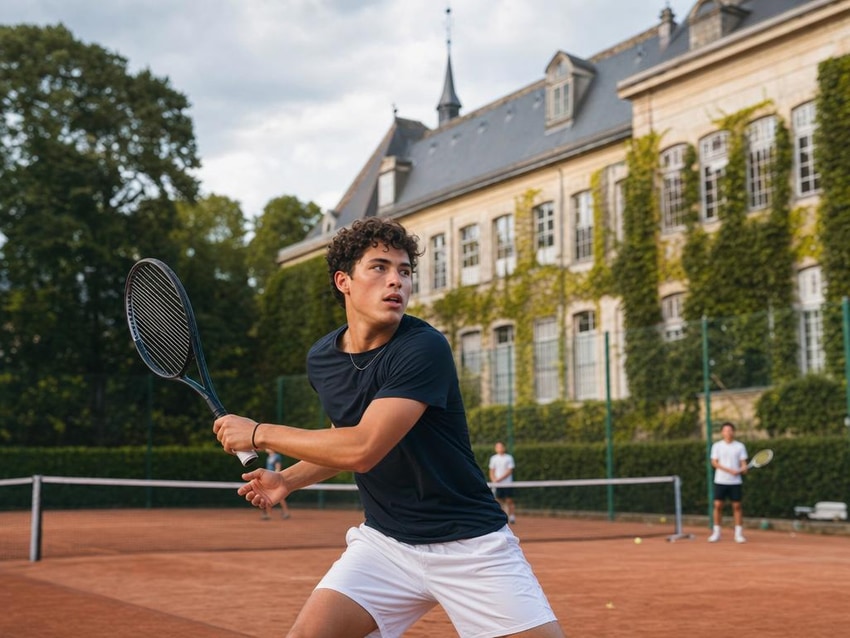
Most tennis exchange programmes promise high-performance training without defining what that means in practice. In tennis, the difference between a productive summer camp and three wasted weeks comes down to three variables: coaching quality, training partner level, and the integration between the technical and language components.
Be Easy curated programmes in Europe work across exactly those three axes, with partner academies in England and Italy that serve distinct athlete profiles. The right format depends on the athlete's technical level, short and medium-term objectives, and the school calendar constraints.
What sets a high-performance tennis exchange apart?
The difference between a generic camp and a high-performance programme is not in the marketing. It is in what happens in the first hours of training.
The high-performance tennis training abroad structures three axes in an integrated way:
- The athlete trains on a professional surface alongside players at the same level from different countries
- Receives coaching with feedback in technical English, the language the professional sport uses
- Faces internal competition throughout the weeks, with real performance assessment
That combination is difficult to replicate in a local setting, regardless of club quality.
The tennis sports exchange has two formats: a short-term summer camp for athletes in development and a long-term boarding school for those who have already committed to a sports career.
Be Easy partner academies in Europe: England and Italy
The two European destinations have distinct profiles that serve different objectives.
Nike Tennis Camps in England with ex-ATP coaches
The programme operates under Nike Tennis methodology, with coaches who came from the professional ATP circuit. The tennis exchange in England with ex-ATP coaches has a modular format of 1 to 4 weeks, accepts all levels from beginners to advanced, and combines tennis with British English in a residential format.
The British advantage lies in the immersion context:
- The ITF junior circuit and Challengers tournaments are conducted in English
- Elite European coaches use English as their working language
- Training happens in that language, not as an isolated academic supplement
Lake Garda in Italy with the Sinner methodology
The second partner destination is in northern Italy, on Lake Garda. The methodology applied there is the same one that developed Jannik Sinner, with an emphasis on baseline consistency, physical conditioning integrated with technical movement, and competitive mindset development.
The tennis exchange at Lake Garda with the methodology that developed Jannik Sinner is structured for athletes who already have intermediate level and want to consolidate technique in a professional European environment.
Why Lake Garda?
Lake Garda is not just a beautiful location. It is a high-level tennis hub, with international junior competitions on the summer calendar. The athlete trains in the same environment as Italian players building their circuit careers.
What is the technical level required for European programmes?
The answer varies by destination. The right criterion is not ranking, but real playing level.
The two destinations have different criteria:
- Nike Tennis Camps (England): accepts all levels, from beginner to advanced, with minimum A2 English
- Lake Garda (Italy): intermediate to advanced level, athletes with two or more years of regular training and solid fundamentals
The tennis summer camp abroad for young athletes has entry criteria that vary by destination and age group, including specific documents required for minors travelling without parents.
An honest assessment by the current coach is the first step before any decision.
What if the athlete is still developing?
The vocational tennis exchange in the Italian mountains is structured for athletes still building their technical foundation. The format is more pedagogical, with lower training loads and more attention to fundamentals development. Recommended for athletes aged 9 to 14 still in the formative stage.
What does technical English in tennis mean for athlete development?
Technical English in tennis goes beyond general fluency. It covers coaching vocabulary (swing path, follow-through, split step, return position), competition terminology, and communication with referees and opponents.
Practical benefits for the athlete:
- Autonomy in training sessions with foreign coaches, without relying on translation
- Direct communication in international matches and competitions
- Ability to interact with American university scouts without intermediaries
Two practical points about the entry level:
- A2 is the minimum to genuinely benefit from classes. Below that, the learning is practically zero
- Programmes with groups separated by proficiency ensure an A2 athlete learns alongside others at the same level, without the discomfort of following more fluent participants
Does the path to the NCAA start in Europe?
Yes, it does. The American university scholarship system evaluates athletes by competitive track record, documented technical level, and English communication ability. All three are built over time, and high-performance European programmes contribute to all three.
The path to the NCAA through the tennis exchange passes through three elements that American university scouts actively assess:
- Documented international competition history
- English proficiency for direct communication with technical committees
- Exposure to coaching from professionals trained on the professional circuit
Long-term boarding school, available at Be Easy European partner destinations, allows accumulating all three over one or two academic years.
From a summer camp to longer programmes
The 2 to 8-week summer camp is the natural entry point. The athlete experiences the environment, the training partner level and the volume of English before the family commits to a full-year boarding school.
Long-term programmes available in the sports exchange curation include:
- Boarding school with a sports calendar integrated with academic studies
- Level assessment and placement in the right group
- Sports scholarship process of up to 70% for qualifying profiles
Families targeting a US university scholarship typically use the European summer camp as preparation before committing their child to an annual programme.
How the tennis exchange fits into the athlete's trajectory
A young tennis player's development follows clear milestones: fundamentals up to age 12, technical consolidation from 12 to 15, and from 15 onwards the visibility window for scouts and university programmes begins.
The complete tennis exchange guide for parents has development milestones by age group to help calibrate the right moment for each type of European programme.
The criterion is not the best, but the most suitable
The objective is not to place the child in the best available programme. It is the right programme for their current level, with a vision of what comes next. A 13-year-old athlete at intermediate level gains more from a well-chosen 3-week summer camp than from a boarding school for which they do not yet have the foundation.
The curation of tennis sports exchange programmes works exactly that fit, considering current technical level, medium-term objective, and available budget.
Frequently asked questions about tennis exchange in Europe
What is the minimum age for European tennis programmes?
Summer camps accept athletes from age 9. The long-term boarding school generally starts at 12 or 13 years old, depending on the destination. The vocational tennis exchange in the Italian mountains serves the 9 to 14 age range with a more pedagogical format.
Does the athlete need to have a competitive level to join the programmes?
Not necessarily. Nike Tennis Camps in England accepts all levels, including beginners. Lake Garda is for intermediate to advanced levels. The entry criterion is not ranking, but real playing level assessed by the current coach.
Which duration makes more sense: 2 weeks or 6 weeks?
It depends on the objective. Two weeks serve for exposure and adaptation testing, without compromising the school calendar too much. Six weeks allow measurable technical consolidation and real language progress. The 3 to 4-week range balances both objectives for most profiles.
Does English need to be at a minimum level before departure?
For the Nike England programme, yes, A2 is the minimum. For Lake Garda, the focus is more technical-sporting, but A2 helps the athlete benefit from coach feedback. Below that, the classroom experience becomes frustrating and language progress is marginal.
Does the European exchange count as experience for the NCAA scholarship process?
Yes, especially when documented with internal competition history and coach assessments. American university scouts value exposure to the European circuit as a sign of an athlete with an international career vision. The track record starts being built from the first summer camp.
Be Easy: boutique exchange consultancy
Be Easy supports families who want to give their child a real advantage on and off the court. If your child is between 9 and 24 years old and interested in developing their tennis in a high-level European environment, we have the right curation to fit the programme to the right moment in their trajectory. To explore the available formats and speak with a dedicated senior consultant, get in touch with us.

