
Nike Tennis Camp in England 2026: what to expect from the programme
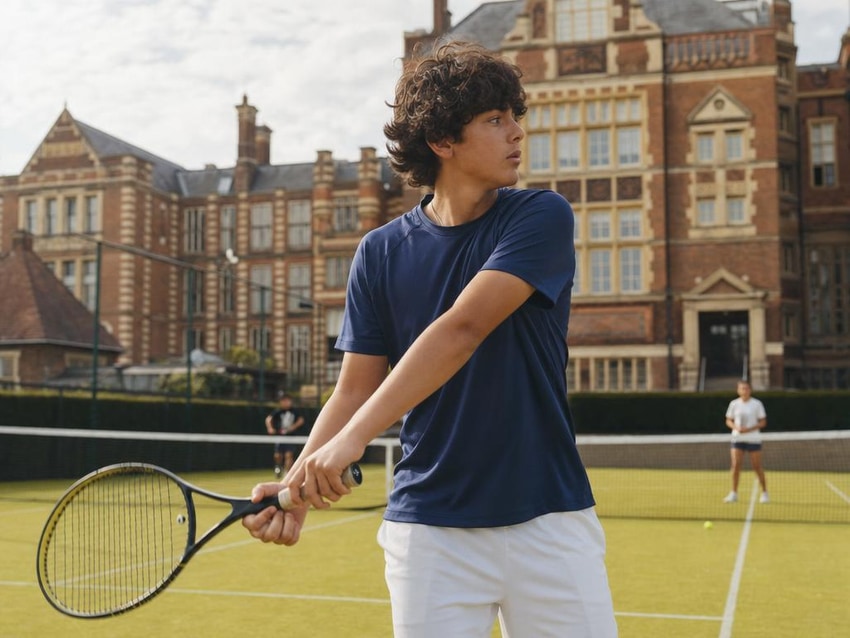
Nike Tennis Camps in England operate with a detail that few British tennis programmes can replicate: the coaches came from the ATP tour. They are not certified instructors who never set foot on a professional court — they are former players who know the difference between training to improve and training to compete.
The programme has been on the British summer calendar for years, attracting athletes from various countries for this very model: professional method, modular structure, and accessible entry for different levels. For a parent evaluating their child's first serious tennis summer abroad, understanding how this programme works in practice is the first step.
What is the Nike Tennis Camp in England?
The Nike Tennis Camp is an intensive tennis training programme held at accredited schools and sports centres in England, with coaches who passed through the ATP or WTA tour. The modular format allows participation from 1 to 4 weeks, which sets it apart from fixed-block programmes.
Three characteristics define the programme:
- Wide age range: serves athletes from 10 to 17 years at all levels, including beginners, with groups separated by ability.
- Multiple surfaces: hard court, clay, and indoor court. Each surface requires footwork adjustments, ball timing, and positioning that a player only develops through direct exposure.
- Former professional coaches: instructors with ATP or WTA tour experience, not just technical certificates.
How does the training structure work?
The training day at Nike Tennis Camps is divided into blocks:
- Individual technique: work on specific strokes with coach analysis
- Match tactics: court reading, point patterns, and decision-making under pressure
- Specific conditioning: lateral movement, first-step explosion, and endurance for long rallies
- Internal competition: matches between participants throughout the week, with coach feedback on real match performance
The advantage of ex-ATP professional coaches shows in the tactics block. A coach who played professional circuits recognises game patterns that conventional coaches do not identify with the same precision. They do not just correct the stroke; they point out the decision that led to the error.
O intercâmbio de tênis na Inglaterra com coaches ex-profissionais ATP explores how this ex-professional coaching method translates into observable technical development week by week.
What is the profile of the athlete who benefits most from the programme?
The Nike Tennis Camp in England delivers different returns depending on the athlete's profile. Three profiles that benefit most from the programme:
Intermediate athlete, 12 to 15 years old, no international background:This player gains exposure to a competitive environment outside their local club. Comparing with European peers of the same age group is a real diagnosis of level. An ATP coach identifying the priority adjustments is worth more than months of training without that external mirror.
Advanced athlete, 14 to 17 years old, defining their career path:The programme serves as a context test before bigger decisions, such as boarding school or sports-focused high school. Feedback from a coach with professional experience helps separate real potential from regional development.
Beginner athlete, 10 to 13 years old, first international trip:The 1-week modular format is viable. The multilingual environment and structured training routine build autonomy and sporting reference points, even without an advanced technical base.
O intercâmbio de tênis: o guia completo para pais explores the criteria for choosing between British programmes according to the athlete's stage.
What does the modular format change in parents' decisions?
The modularity of 1 to 4 weeks is the point that most differentiates the Nike Camp from other British tennis programmes. This solves two practical problems that many families face:
- School calendar: with 1 or 2-week modules, the child can participate during holiday periods without compromising the school year.
- First contact with international programmes: one week is sufficient to assess adaptation to the environment, training pace, and interaction with athletes from other nationalities, before committing to longer blocks.
O summer camp de tênis no exterior has measurably different impact depending on duration: 1 week delivers adaptation and diagnosis, 3 or more weeks deliver accumulated technical gains.
For athletes with 2 or more years of training, 2 to 3 weeks deliver measurable technical gains. Below that, the return is level diagnosis and environmental adaptation.
O intercâmbio esportivo de tênis covers programmes from short-duration formats to long-duration options for those who have already defined tennis as their career path.
How does the British Nike Camp compare to training in Italy and the USA?
Three destinations concentrate the majority of families researching high-level tennis programmes abroad: England, Italy, and the USA. Each serves a different profile:
- England (Nike Tennis Camps): modular, accessible at all levels, ex-ATP coaches, multiple surfaces. Ideal for first contact with international standards or for athletes who need date flexibility.
- Itália (Lake Garda): o intercâmbio de tênis na Itália com a metodologia do Lake Garda applies a high-performance development system. Recommended for intermediate and advanced athletes seeking immersion in a specific methodology.
- EUA (Hoosac School): o boarding school de tênis nos EUA com caminho para a NCAA is the option for athletes with tennis as a long-term project, with an integrated curriculum and visibility to university scouts.
The choice between the three depends on the athlete's stage and the family's objective. The British Nike Camp works as a short-term step; the other two are for athletes with a more structured career decision.
A curadoria de intercâmbio esportivo from Be Easy brings together the three destinations by profile, age group, and objective.
What should parents check before confirming participation?
Four practical points that come up in families' questions:
- Child's actual level: the Nike Camp accepts beginners, but the pace is that of training, not basic learning. A child with fewer than 6 months of practice may struggle with the environment's demands. Confirm with the current coach which module is appropriate.
- Functional English: the environment is entirely in English. Fluency is not required, but the child needs to understand simple instructions and communicate minimally. Below that threshold, the coach loses time on adaptation and the child misses content.
- Documentation for minors: England requires documented parental authorisation for unaccompanied minors. Preparing the paperwork 4 to 6 weeks in advance eliminates any deadline risk.
- Right module for the objective: 1 week for diagnosis and first contact; 2 to 4 weeks for real technical development. This decision becomes clearer after talking with people who have already supported other athletes in the same programme.
O intercâmbio na Inglaterra com treinamento de tênis follows a structured daily routine with integrated tennis and English blocks.
O treinamento de alto rendimento no tênis no exterior follows distinct approaches: British prioritises volume across multiple surfaces, Italian works on high-performance methodology, American integrates tennis and academic curriculum.
Frequently asked questions about Nike Tennis Camp in England 2026
Does the programme accept athletes with no official competition history?
Yes. The criterion is basic ability, not competitive record. An athlete who trains regularly but has never entered a tournament can participate, as the level-based grouping within the camp ensures training with peers of equivalent ability.
What age range does the Nike Tennis Camp in England serve?
The programme serves athletes from 10 to 17 years old. Athletes under 10 generally do not have the physical conditioning or concentration capacity to take full advantage of the programme's training load.
Does the athlete need an ETA to participate in the camp in England?
It depends on the passport. England requires an Electronic Travel Authorisation (ETA) for citizens of several countries. The process is online and takes a few days, but verifying the requirement at least 4 weeks in advance avoids last-minute issues.
What is the practical difference between the Nike Camp and a tennis boarding school?
The Nike Camp is short-term (1 to 4 weeks) and focused on intensive holiday development. Boarding school integrates a full academic curriculum and training over months or years. The camp is the short-term step; boarding school is for athletes with a defined career project.
Can the camp coaches' feedback be used in applications to other programmes?
Yes. The technical report from ex-ATP coaches describes the athlete's strengths, required adjustments, and comparative level within the group. This document informs decisions about subsequent programmes, whether boarding schools, high schools, or long-duration academies in the USA or Italy.
Be Easy: boutique study abroad consultancy
Be Easy supports families who want to take their child to a professional-standard tennis environment without improvising on programme selection. If your child is between 10 and 17 years old and tennis is part of their development plan, our curation covers everything from the British Nike Camp to boarding school in the USA and long-duration programmes in Italy, with profile assessment and guidance at every stage. To speak with a dedicated senior consultant and identify the right programme for your child's current stage, get in touch with us.

