
Karting Academies for Young People: How to Start in Competitive Motorsport

Parents who notice their child's interest in speed, simulators, and racing eventually arrive at the same question: is karting a real path or just an expensive hobby? The answer depends on how entry into the sport is planned. Karting is, in fact, the mandatory starting point for any professional motorsport career. All Formula 1 champions of recent decades went through karting before the age of 14. What differentiates those who progress from those who stay in it for leisure is the training structure and the moment the young driver comes into contact with the international competitive environment.
Why is karting the foundation of professional motorsport?
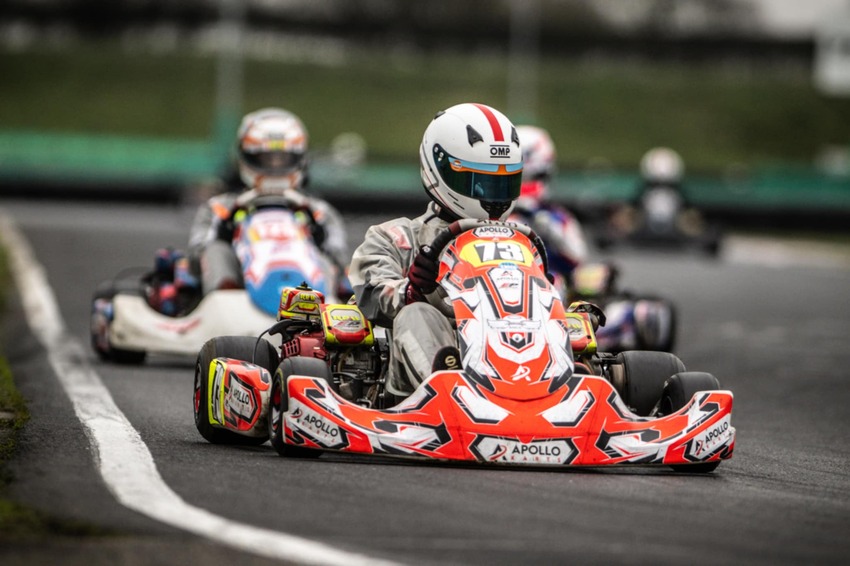
The kart is the closest equipment to the experience of a real single-seater for those still in training. Without bodywork, without electronic assistance, without an automatic gearbox: the driver needs to develop brake sensitivity, corner reading, and tire management from the very first sessions.
European motorsport academies use karting as a central pedagogical tool because it exposes the driver to traction limit situations that street cars will never replicate. For young people between 8 and 16 years old, it is the only environment where this skill can be built safely and with real technical progression.
What are the karting categories by age group?
The international karting structure is organized by the FIA and by series such as the Rotax Max Challenge, with categories that follow the physical and technical development of the driver.
FIA Karting Categories (CIK-FIA)
The FIA divides drivers into competition grades according to age:
- Grade G (12 to 14 years old): OK-Junior and Academy Junior categories. First contact with the FIA-regulated championship environment.
- Grade F (14 to 15 years old): OK and Academy Senior categories. Transition to karts with higher power and technical demands.
- Grade E (15 years and older): OK, KZ, KZ2, Academy Senior. The grade closest to the professional environment, with shifter karts (KZ) and a full European calendar.
The 2026 FIA Karting European Championship includes multiple rounds between April and September, distributed across circuits in Europe.
Rotax Max Challenge Categories
The Rotax Max Challenge is another international benchmark, approved by CIK-FIA, with competitions at club, national, and international levels, culminating in the annual Grand Finals. Young categories include:
- Micro MAX: 8-11 years
- Mini MAX: 10-13 years
- Junior MAX: 12-14 years
- Senior MAX: 14 years and older
Rotax also introduced the electric E10 Mini category (9 to 12 years old) at the Grand Finals in 2026, reflecting professional motorsport's transition to electric engines.
For parents following motorsport exchange programs available in Europe, understanding which category their child fits into is the starting point for choosing the right program. available in Europe, understanding which category their child fits into is the starting point for choosing the right program.
How does a karting academy in Europe work?
Training academies in Europe, especially in regions with a higher density of circuits like Lombardy (Italy), Valencia (Spain), and Southern England, operate with two main formats.
Short immersion format (karting summer camp)
These are 1 to 2-week programs with a focus on technical skills and driving. The young participant arrives at the circuit, undergoes a skill assessment, trains with accredited instructors, and concludes the period with timed sessions that allow for progress comparison. This format is suitable for those who want to test the sport before a greater commitment or for those who already compete locally and seek exposure to European methodologies.
The exposure to the European environment, telemetry methods, and structured technical feedback from coaches differentiates this type of program from a recreational karting day. The motorsport exchange program in Italy for young enthusiasts shows how the European ecosystem connects driving, technology, and career development.
Season format (long-term training)
For young people who have already committed to motorsport as a career path, some European academies offer full-season programs. The driver trains during the local season, participates in regional championships, and collects performance data used to identify areas for improvement. This format requires greater availability and is usually accompanied by a dedicated karting coach.
The choice between a short immersion and a full season depends on where the young person is on their development curve, not just their desire to compete. The youth career vocational program from Be Easy covers exactly this transition, mapping out options according to the driver's profile and age.
What to expect from training at a European academy?
Reputable karting academies in Europe structure their training around three pillars:
- Technical driving: racing lines, braking points, tire management, and kart setup. Drivers learn to read telemetry data even in junior categories.
- Physical conditioning: even in karts, muscular demands (especially on the neck, shoulders, and core) are high during intense training sessions. Top-tier academies include a physical protocol in their program.
- Mental training: race craft, incident management, and composure under pressure. Experienced coaches work on these aspects in parallel with technical driving.
The path to working in Formula 1 involves this foundational training, whether as a driver or an engineer.
Be Easy's motorsport program curation brings together both driving and engineering options, allowing families to assess which path makes more sense for the young person's profile.
What is the ideal age for a young person to start competitive karting?
The entry point into competitive karting varies by objective:
- Ages 8 to 12: This is the ideal phase for exploration without performance pressure. The focus is on developing reflexes, coordination, and a love for the sport.
- Ages 12 to 15: This is a crucial decision-making period. Those who have shown talent and discipline can enter sanctioned championships in this age group. The OK-Junior and Junior MAX categories are benchmarks at this stage.
- Ages 15 to 17: This is a critical window for those aiming for a professional career. At this age, technical skill and results in European championships begin to be noticed by junior formula teams.
Starting at 14 or 15 years old is still viable for a competitive career, provided the training regimen is intense and consistent. What is not viable is starting late without professional support infrastructure.
Youth Karting FAQs
Does my child need their own kart to join an academy?
Not for short immersion programs. Summer camp academies provide the equipment during the program. For season-long competitions, owning a kart becomes necessary, but many European academies have training fleets available to reduce the initial investment.
What is the difference between recreational karting and competitive karting?
Recreational karting uses electric or low-displacement karts on indoor tracks, without official timing or sanctioned categories. Competitive karting uses equipment regulated by FIA or Rotax, on homologated circuits, with practice sessions, qualifying, and races. The technical skill gap between the two is significant.
How can I tell if my child has the potential for professional karting?
The most common signs observed by coaches are: consistency in lap times (not just speed on an isolated lap), the ability to adapt style to tire conditions, and performance under pressure. An evaluation at an accredited academy is more reliable than any informal observation.
Is karting also useful for those who want a career in motorsport engineering?
Yes. Young people who want to pursue an engineering path benefit from understanding karting as a system, not just a vehicle. Exposure to telemetry, setup, and performance data at a European academy is formative for those who will later study engineering. The motorsport engineering course for teenagers is a natural progression for this profile.
How often should a young person train to improve in karting?
European-level coaches recommend at least two weekly driving sessions for consistent progress, combined with regular physical conditioning. Occasional monthly training sessions yield little technical improvement. Frequency is the main factor that separates drivers who advance through categories from those who stagnate.
Be Easy: Boutique Exchange Consultancy
Be Easy supports families who want to give their child a real advantage before making a career decision in motorsport. If your child has shown interest in competitive karting or the world of motorsport, we offer the expert guidance needed for them to experience the European environment with professional support. To understand the available options and speak with a dedicated senior consultant, contact us.

