
How can I become an eSports player?
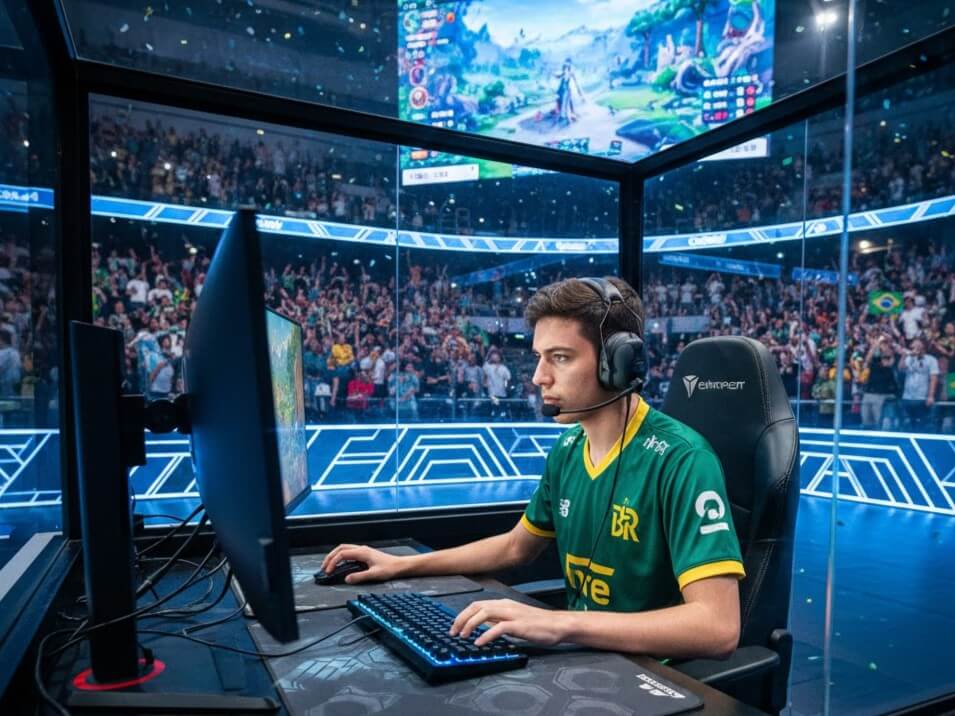
The short answer is: with structure, consistency, and right formation. The full answer is what this article will show you.
Esports ceased to be a pastime a long time ago. Today it's a global industry with professional leagues, contracts, salaries, sponsorships, and university vacancies. But reaching that level requires much more than hours of play, it requires the same type of development that any high-performance athlete must undergo.
If you want to know where to start, what to develop and how the exchange can be a real route to reach the international competitive level, this is your guide.
What does it take to become a real eSports player?
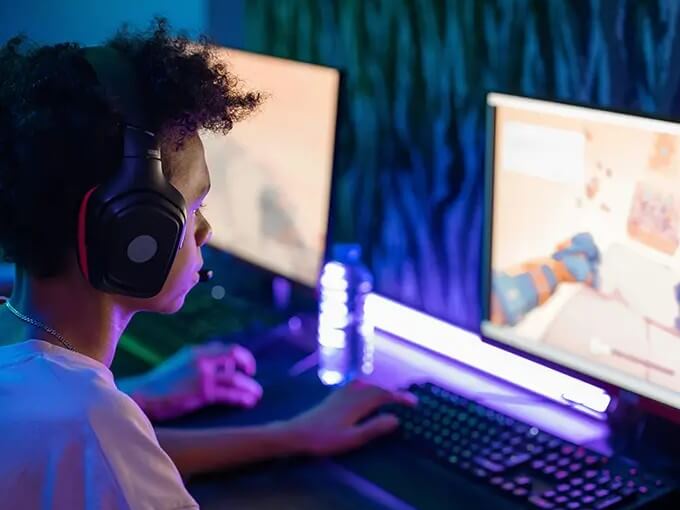
A lot of people confuse “playing well” with “being an esports professional”. They're different things. A good player has fine mechanics. A professional has mechanics, game vision, competitive mentality, ability to work as a team under pressure, and consistent performance over time.
The elements that separate casual players from real competitors are:
- Specialization: Deeply master one or two titles, don't play everything superficially
- Game analysis: study replays, understand errors and intentionally correct them
- Communication: Communicate clearly and quickly with the team in high-pressure situations
- Mentality: deal with defeat, stay focused after mistakes, and sustain performance over long series
- Workout routine: sessions with defined objectives, not just random hours of gaming
That's exactly what structured esports programs teach and what differentiates those who just play from those who actually compete.
Is there a specific lineup for esports?
Yes, and she's growing fast. Universities around the world, especially in the United States and Canada, already offer degrees in esports management, game design, game broadcasting, and communication applied to gaming.
But before arriving at university, there is a previous training path that makes all the difference: high school with an esports track. This model exists in some international schools and is especially developed in Canada, where the Fort Erie International Academy (FEIA) maintains the only esport school program in the country with direct paths to university scholarships.
Those who are considering the exchange as a training route can learn more about the article about How can teenagers exchange e-sports in Canada, which details how this program works in practice.
How does a professional eSports player train?
The training model in professional eSports is very similar to that of conventional athletes. There are individual technical sessions, analysis of opponents, tactical teamwork, scrimmages (training games) and periods of mental recovery.
A typical day in a structured esports program includes:
- Individual warm-up: Mechanical heating and reflexes
- Tactical team training: execution of strategies and rotations
- Replay review: critical analysis of the errors from the previous session
- Scrimmage against other teams: Application of training in a real competitive situation
- Debriefing with the coach: performance assessment and adjustments for the next workout
Additionally, serious esports programs include fitness, posture control, nutrition, and mental health, areas directly linked to an esports athlete's longevity and consistency.
What skills go beyond the game itself?
Players who rise to the top of esports are rarely just good at the game. They develop a skill set that makes them valued both inside and outside the servers:
- Leadership: Make quick decisions and guide the team through decisive moments
- Communication under pressure: Transmit information clearly in fractions of a second
- Adaptability: Adjust strategy during the game as the opponent reacts
- Discipline: Maintain a training routine even without immediate results
- Analytical intelligence: interpret performance data and translate it into practical improvement
These are skills that universities value in candidates and that employers in the technology, marketing, and entertainment industries recognize as differentials.
Can the exchange accelerate my career in eSports?
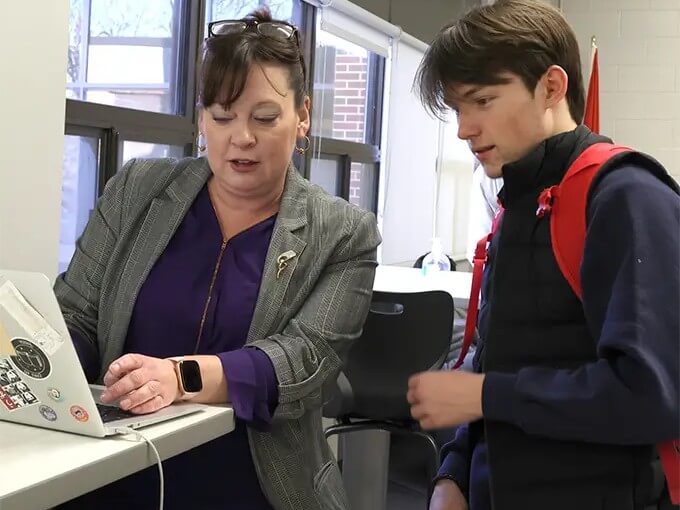
Yes, in very concrete ways. Playing in an international competitive environment exposes the player to different styles of play, to coaches with advanced methodologies, and to leagues with a higher technical level than most find locally.
But the gain goes beyond performance. Studying abroad creates a more complete profile: the player develops English in immersion, learns to work in multicultural teams, builds a global network of contacts and, if he opts for a program like the FEIA, he leaves with academic credits recognized by universities in Canada and the United States.
For those who are still in high school, the sports exchange can work as university preparation. O Exchange for teenagers has specific options by destination and profile and esports is already part of that program portfolio.
What careers are available in the esports industry?
The career of a professional player is the most visible, but it is far from being the only one. The esports industry creates opportunities in dozens of areas:
Within the sport:
- Professional player and team athlete
- Coach and performance analyst
- Sports psychologist specializing in esports
In production and communication:
- Broadcaster and commentator
- Content producer and streamer
- Video editor and motion designer
In business:
- Team and organization manager
- Marketing and sponsorship specialist
- Event and Tournament Manager
In technology:
- Game developer
- Network and infrastructure engineer for online competitions
Those who graduate from a structured esports program leave with a solid foundation for any of these trails, not just for their gaming career.
How does the boarding school model connect to esports?
Some international boarding schools are already seriously integrating eSports into the curriculum. This model places students in an environment of total immersion: they live, study and train in the same place, with a dedicated structure and constant interaction with high-level colleagues.
This type of environment accelerates development because it eliminates distractions and creates consistency in the routine. It is the same principle that makes conventional sports athletes choose boarding schools in Canada that combine studies with elite sports.
The difference for those who are in esports is that the program also provides training in digital marketing, content production, and management, skills that open doors in the industry regardless of whether the student achieves professionalism as a player.
Should I do regular high school or an e-sports-focused program?
It depends on the objective. Whether the goal is a competitive career in esports or training in the area, a program with an integrated esports track in the curriculum offers clear advantages compared to conventional high school: professional coaching, participation in leagues, and training in specific areas of the industry.
If the decision is still open, the article on Whether high school is always the best option for exchange teenagers helps you compare formats more clearly.
For those who have already completed high school and want to pursue higher education in Canada, College Co-op in Canada It is a path that combines study in IT, business or digital media with practical professional experience, areas directly connected to the esports industry.
FAQ: How to become an esports player
- Do I have to be really good to start an esports program? No. Structured programs like FEIA Esports don't require a competitive background. What matters is commitment and willingness to evolve with guidance from coaches.
- Is it possible to reconcile esports with regular high school? Yes, but integrated programs do this more efficiently. The curriculum is organized so that training and competitions do not compromise academic performance.
- Is English required for international esports programs? Intermediate English is the recommended minimum. Immersion in the program accelerates language development naturally.
- What titles are worked on in school esports programs? It varies by program. The most common ones include team strategy and competitive battle royales. The focus is on titles recognized by university leagues and international organizations.
- Does the e-sports exchange help you get a university scholarship? Yes. Programs like the FEIA create direct paths to esports scholarships at North American universities, with an academic record and competitive portfolio built during the program.
Be Easy
Be Easy accompanies students who want to transform their passion for esports into real international training, with full support from the choice of the program to the arrival at the destination. If you want to understand which path makes the most sense for your profile or for that of your child, contact us and see how the Be Easy Sports Exchange may be the next step.

