
Career in aerospace engineering: why starting with an international program as a teenager makes all the difference
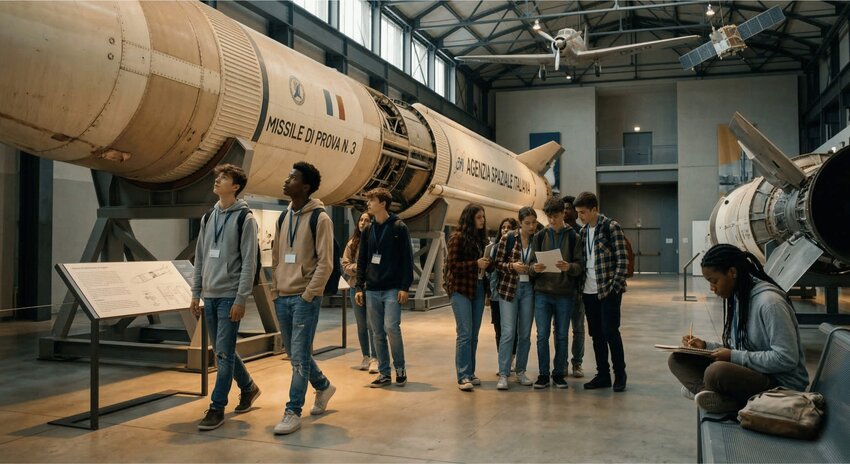
A career in young aerospace engineering is one of the most competitive and fascinating paths in modern technology. Designing rockets, working on space missions, or developing advanced propulsion systems requires more than talent: it requires early preparation.
What differentiates aerospace engineers who go to the best universities and leading companies in the sector is not just the entrance exam score. It is the history of practical training, exposure to demanding environments, and the ability to solve real problems. And it could all start long before college. In this article, we will show you how an international residential program while still in high school puts your child years ahead in building that career.
Why does a career in aerospace engineering require advance preparation?
Aerospace engineering is among the most highly sought after degrees in the world. Elite programs at universities in Europe, the United States, and Canada receive dozens of candidates per vacancy. The selection criteria go beyond grades: the boards evaluate practical projects, the history of extracurricular activities and, increasingly, documented international experiences.
This means that the process of entering a good outdoor aerospace engineering college begins years before graduating from high school. Young people who apply with only good grades compete at a disadvantage with those who already have certificates, projects, and international experience in the curriculum.
The three pillars that top universities evaluate are:
- Evidence of genuine interest: participation in technical programs, scientific competitions, hands-on projects
- Ability to learn in multicultural environments: fluency in English or another language, history of studying abroad
- Maturity and autonomy: living outside the home, adaptation to high performance settings
How to enter aerospace engineering? What the Best Colleges Really Ask For
Many parents and young people believe that preparation for aerospace engineering begins the day before the entrance exam or SAT. In practice, the reference universities construct a longitudinal view of the candidate.
- Portfolio of technical activities: electronic, robotics, programming, or rocketry projects developed during high school
- Specialized training certificates: courses at recognized institutions, especially abroad
- Solid motivation letter: which narrates a coherent trajectory, not a list of scattered activities
- Recommendations from international teachers and mentors: increasingly valued differential
- Results in Olympic games and scientific competitions: OBMEP, Physics Olympiad, FIRST Robotics and similar
The good news: all of these elements can be built. And a well-structured international residential program directly contributes to at least three of the five items above.
What is Be Easy's aerospace engineering program in Rome?
Be Easy Exchange offers the program Aerospace Engineering & Space Tech, carried out at Sapienza University of Rome, one of the largest and oldest universities in the world, founded in 1303, with one of the most respected aerospace engineering schools in Europe.
The program is exclusively residential, with 13 nights in Rome. Young people are staying close to the campus, with three meals a day, international travel insurance, 24-hour support and certificate of completion issued by the university itself.
What are the program's modules?
The curriculum was developed to cover the three major stages of an aerospace engineer's actual job:
Module 1: Rocket Engineering & PropulsionParticipants study the fundamentals of propulsion and rocket physics. The objective is not to memorize formulas, but to understand how forces act on a launch vehicle and what variables determine the success of a launch.
Module 2: Space Mission Simulation & Embedded SystemsHere, young people simulate space mission trajectories and work with embedded systems using Arduino. It is the module where programming meets physical engineering, one of the skills most in demand in the sector today.
Module 3: Rocket Prototype Development & LaunchThe final module is the most awaited: the participants build a functional rocket as a team and carry out the actual launch. It is the moment when theory and practice meet in concrete results.
What companies and institutions do the participants visit during the program?
In addition to classes at Sapienza, the program includes visits to strategic partners that bring young people into direct contact with the professional aerospace market.
- Leonardo S.p.a.: one of the largest aerospace and defense companies in the world, with headquarters in Italy. The visit is exclusive and allows young people to discover real aeronautical development facilities.
- Pagani Automobili: visit the factory of one of the most sophisticated supercar manufacturers in the world, where aerospace engineering and automotive design intersect in composite materials and high-performance aerodynamics.
- Italdesign & Museum: global reference studio in industrial design, founded by the legendary Giorgetto Giugiaro. Participants learn about the product development process that combines science and aesthetics.
These visits are not sightseeing tours. They are immersions in the professional environment that young people want to inhabit in the future. Having this contact at the age of 16 is very rare and weighs specifically on the curriculum.
Rocket career for young people: what practice areas are there?
The aeronautical training of adolescents today points to a rapidly expanding market. The aerospace sector is no longer limited to government agencies like NASA or ESA. The so-called “new space economy” includes hundreds of private companies, research institutes, and defense technology startups.
The main lines of action for those pursuing a career in aerospace engineering are:
- Propulsion and launch systems (rockets, missiles, satellites)
- High-performance vehicles and applied aerodynamics (civil and military aviation)
- Navigation and flight control systems
- Satellite and orbital mission engineering
- Space robotics and unmanned vehicles (drones, UAVs)
- Aircraft design and lightweight composite materials
Aerospace engineers work in companies such as SpaceX, Boeing, Airbus, Leonardo, ESA, NASA JPL and in dozens of startups that emerge each year in the sector. The most contested profile is that of a professional who combines a solid technical base with international experience and fluency in English, exactly what a residential program like this one begins to build.
Aerospace engineering college abroad: what are the main options for those planning now?
Those considering graduating outside Brazil need to understand that the application process is long and begins, on average, 18 to 24 months before the start of the course.
Among the countries with the highest offer of cutting-edge programs are:
- Italy: Sapienza (Rome), Politecnico di Milano and Politecnico di Torino are among the best engineering schools in continental Europe
- United Kingdom: Imperial College London, University of Southampton, and University of Bristol have globally reputable aerospace engineering programs
- Germany: TU München, RWTH Aachen and Universität Stuttgart are references in engineering and have a strong connection with the European industrial market
- USA: MIT, Caltech, Georgia Tech, and the network of universities with AIAA programs are classic destinations for the area
To apply for any of these programs, young people need much more than grades. A history of practical training, certificates and documented international experience are differentials that make the application stand out from the crowd.
Does the program certificate have real value in the curriculum?
Yes, and the impact is concrete. The certificate issued by Sapienza University of Rome is a document of an institution with more than 720 years of history, recognized in university selection processes around the world.
For a young person aged 15 to 18 who is still in high school, presenting this certificate with a rocket project developed in Rome is an objective differential. It's not something you can manufacture or simulate. The certificate of completion is a concrete differential in applications for engineering courses at European and North American universities.
Who can participate in the program?
The program is aimed at young people from 15 to 18 years old with an interest in engineering, space and technology. It is not necessary to have advanced prior technical knowledge: the curriculum was designed to develop practical skills starting at the level of the participants.
The ideal profile is a young person who:
- Are you genuinely curious about science, technology, and space
- Are you interested in mathematics, physics or programming
- Do you want to build a real difference before entering the university?
- Are you open to working as a team in an international environment
- Are you willing to experience 13 nights of immersion away from home
Intermediate-level English proficiency is recommended, as the program is conducted in a multilingual environment with participants from different countries.
Summer 2026: when does the program take place?
The 2026 edition of the Aerospace Engineering & Space Tech program takes place between July 19 and August 1, in Rome. There are 13 nights of full immersion at Sapienza University of Rome, with classes, laboratories, exclusive visits and rocket launches.
The residential package includes:
- Accommodation for the entire duration of the program
- Three meals a day
- International travel insurance
- 24-hour support from the Be Easy team
- Sapienza University of Rome Certificate of Completion
- Exclusive visits to Leonardo S.p.a., Pagani Automobili and Italdesign
FAQ: frequently asked questions about careers in aerospace engineering for young people
1. Do I need to know how to program to participate in the program?It's not a prerequisite. The embedded systems module with Arduino starts from the basics and is developed in a practical way during the program. Interest and willingness to learn are sufficient.
2. Does the program at Sapienza replace an engineering degree?No. The program is complementary training for teenagers in high school. It serves as a preparation, curriculum differential, and first real contact with the academic and professional environment in the area, not as a substitute for graduation.
3. How does this program help with applying to universities abroad?It generates three concrete assets for the application: a certificate from a prestigious European university, a documented practical project (rocket built and launched), and a trajectory narrative consistent with the chosen area.
4. Does my child need to speak fluent English to participate?An intermediate level is recommended to follow classes and interact with other participants. The environment is multilingual and the Be Easy team offers support in Portuguese throughout your stay.
5. What are the differences between this program and a scientific Olympiad in preparing for engineering schools?They are complementary paths, not exclusive ones. Olympics show intellectual performance. An international residential program shows maturity, autonomy, teamwork, and practical experience. The best applications bring the two together.
Be Easy Exchange
At Be Easy, we help families build international trajectories with planning, safety, and real results. We specialize in programs for young people aged 15 to 18 who want to prepare for the best universities and careers in the world. If you want to understand how the aerospace engineering program in Rome fits your child's plan, contact us and let's talk.

