
Basketball exchange in England for teenagers: professional training and English study
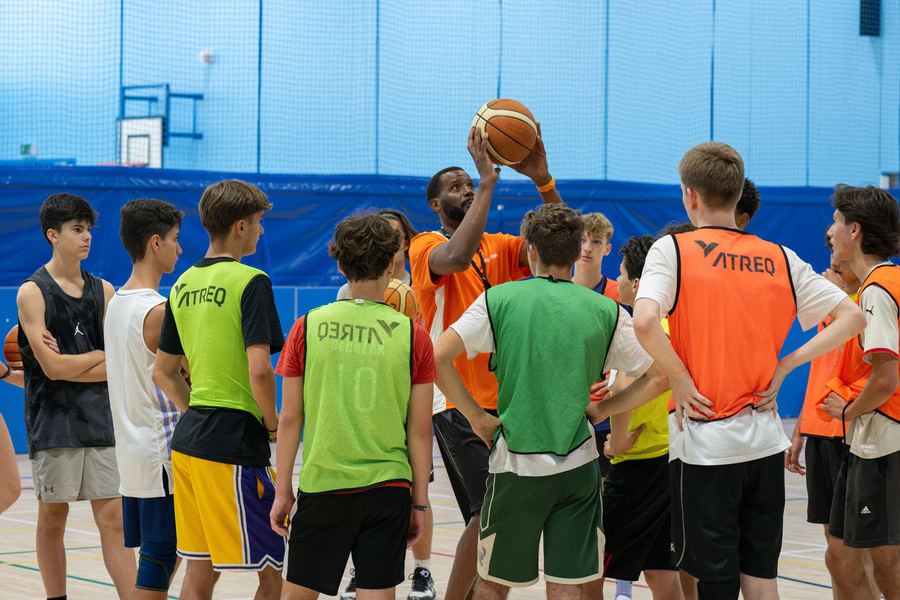
Wake up at a historic boarding school, train on professional courts with former British Basketball League players, and study internationally certified English. This is the daily routine of teenagers between 13 and 17 years old who choose the Exsportise Basketball program in England.
The combination of 15 hours a week of Intensive basketball with English course accredited by the British Council, it creates an environment where sporting development and language fluency take place simultaneously. They are not parallel activities, but integrated experiences that reinforce each other.
How does a typical day on the show work
.jpg)
The routine begins at 7 am with a group breakfast where you interact with young people from more than 80 countries. At 9 am, English classes begin in classes divided by proficiency level, working from grammar to oral presentations.
After lunch, the focus shifts to the courts. Three hours of training include warm-up, technical fundamentals, tactical systems, and competitive games. FIBA certified coaches work on specific aspects with each skill group.
Typical daily structure:
- 7:00: International breakfast
- 9:00 a.m. - 12:00 p.m.: Academic English classes (3 hours)
- 12:30: Lunch at the cafeteria
- 14:00 - 17:00: Professional basketball training (3 hours)
- 17:30: Free time and social activities
- 19:00: Dinner
- 8:00 p.m.: Supervised evening activities
Weekends include cultural excursions to Cambridge or London, depending on the school's location. You explore historic castles, museums, and sights while practicing English in real settings.
Tony Windless: from professional gamer to adolescent mentor
Tony Windless is not just a former athlete, but one of the greatest legends of the British Basketball League. His decades-long professional career brought practical knowledge about what separates average players from elite athletes.
He developed a specific methodology for adolescents, understanding that young people from 13 to 17 years old need a different approach from adults. The focus is not just on technical skills, but on building a competitive mindset and discipline that will serve a lifetime.
During the program, Tony makes regular visits to campuses, conducting masterclasses where he shares experiences of European professional basketball. These moments inspire young people to envision real career possibilities in the sport.
English through basketball: vocabulary that remains
Learning “pick and roll” shouted by a British coach during a competitive game fixes the term in memory in a way that no traditional class can. English ceases to be an abstract school subject and becomes a necessary tool to play better.
Coaches explain tactical concepts in English, provide technical feedback in the language, and conduct video analysis using professional terminology. You absorb specialized vocabulary without realizing that you're studying.
Terms that become natural:
- Foundations: dribble, crossover, euro step, fake pump
- Defense: zone defense, man-to-man, help defense, switch
- Attack: fast break, transition offense, spacing, backdoor cut
- Game situations: timeout, foul trouble, clutch time, momentum
The formal English course works in parallel on academic skills such as writing, reading comprehension, and presentation skills. The Step-up English methodology, certified by the British Council, prepares you for international tests such as TOEFL and IELTS.
Oundle and Worth: two schools, different experiences
Oundle School breathes British academic tradition a few kilometers from Cambridge. The centuries-old buildings create an atmosphere that mixes history with modernity. Professional-standard indoor courts contrast with manicured gardens and Victorian architecture.
Worth School offers a strategic location close to London, allowing teenagers to discover the British capital on weekend excursions. The campus has sports facilities comparable to professional clubs, with training centers equipped with modern technology.
Practical differences between schools:
- Oundle: Age 13-17 years old, minimum A2 English, intense academic focus
- Worth: Age 13-16 years old, accepts A1 English (beginners), close to London
Both provide genuine international coexistence. Not only do you stay with people from your country, but you share a room with someone from a completely different culture, accelerating intercultural adaptation.
Development beyond the court
Adolescents between 13 and 17 years old are in a crucial phase of identity formation. The program works on personal development through structured challenges that go beyond basketball.
Living away from family for the first time teaches independence. Managing your own clothes, respecting schedules without parental reminders, and resolving coexistence conflicts develops maturity that years of verbal advice cannot.
Naturally developed skills:
- Time management between training, classes and rest
- Communication in situations of cultural conflict
- Resilience when faced with defeats or difficulties
- Leadership in multicultural teams
- Self-knowledge through controlled challenges
Experienced staff recognizes moments of growth and intervenes when necessary. It's not an environment of abandonment, but a safe space to make mistakes and learn from them under proper supervision.
Certifications that count in the curriculum
At the end of the program, you receive two documents that differentiate your resume from other teenagers. The British Council certificate proves proficiency in English recognized globally by educational institutions.
The basketball technical report, signed by FIBA certified coaches, details the evolution observed during the period. This document can be used in future applications for sports programs, demonstrating that you have undergone validated international training.
For teens who plan High school abroad, these certifications eliminate doubts about adaptability. You won't have to convince institutions that you can study in English, as they already have concrete proof.
Living with 80 countries: global friendships
Diversity goes far beyond numbers. You share meals with someone from Japan, play against a team made up of young people from Germany and Spain, and share a room with a colleague from Australia or the United Arab Emirates.
These interactions teach tolerance and empathy in ways that no theoretical course can. You discover that people from radically different cultures share the same passions, fears, and dreams as you.
Real cultural learning situations:
- Adapt to different concepts of punctuality
- Understanding humor in varied cultural contexts
- Respect diverse dietary and religious practices
- Communicate when words aren't enough
- Celebrate festivals and traditions from other countries
Many teens maintain friendships built during the program for years. These connections often result in international visits, exchanges of experiences, and networking that benefits future educational and professional opportunities.
Safety framework for concerned parents
Sending a 13-year-old teenager to another country creates natural anxiety. The program eliminates most concerns through a structure tested over decades serving international families.
Supervisory ratio ensures that there are always adults available. Multilingual staff facilitates communication if teenagers have difficulties with English. Comprehensive health insurance covers medical emergencies, and established protocols guide response to any situation.
Implemented security measures:
- Check-in required at established times
- 24/7 supervision in the dorms
- Clear rules about leaving the campus
- Immediate communication system with parents
- Medical staff on duty
- Protocols for various emergencies
Parents receive regular updates through photos and weekly reports. They don't stay in the dark about how their child is adapting, but they also don't have to micromanage every aspect of the experience.
Specific physical preparation for teenagers
.jpg)
The training respects the physical limitations of developing bodies. Coaches understand that teenagers are not young adults but have specific needs related to growth, muscle development, and injury prevention.
Strength exercises focus on body weight and functional movements, avoiding overloading still-forming joints. Conditioning sessions develop cardiovascular endurance without exaggerations that can cause chronic fatigue.
Components of fitness:
- Basketball-specific mobility and flexibility
- Core strengthening for spine protection
- Age-adapted plyometric exercises
- Development of speed and agility
- Active recovery and injury prevention
Nutritionists advise on proper nutrition for adolescent athletes. Meals in the cafeteria are balanced, but you also learn nutritional principles that you can apply after returning home.
How to prepare before boarding
Months before the trip, it is worth starting gradual preparation. Increasing physical activity helps the body adapt more quickly to the volume of training. If English is at the basic level, watching basketball games in English familiarizes you with technical vocabulary.
Adjusting time zone a few days earlier reduces jet lag. The UK is typically 3 to 5 hours ahead of American times, depending on the region of origin. Going to sleep progressively earlier makes it easier to adapt.
Preparation checklist:
- Documents: valid passport, British visa, health insurance
- Physics: medical check-up, up-to-date vaccines
- Equipment: basketball sneakers, sportswear, outerwear
- Linguistics: basic basketball vocabulary in English
- Mental: talk to family about realistic expectations
Be Easy provides detailed guidance on every practical aspect. It's not a process you face alone, but a journey with expert support from start to finish.
Next steps after the summer program
The experience often sparks interest in longer programs. Teenagers who adapt well seek options such as Complete boarding school to study the entire academic year abroad.
Others use obtained certifications to strengthen applications in programs of sports exchange in countries like the United States, Canada, or Spain. The summer camp acts as a test that clarifies whether you want to pursue a career combining sports and international education.
Continuity possibilities:
- School year at British boarding school
- High school in Canada with sports program
- Athletic development programs in the USA
- More extensive language courses
- Gap year focusing on professional basketball
Be Easy maps the complete route aligned with your objectives. Each experience is planned as a strategic stepping stone in a larger journey, not an isolated event.
Dates and planning for 2026
Six weeks available between late June and early August provide flexibility for different school calendars. You can participate in a week as a first contact or chain multiple together for deeper immersion.
Available periods:
- 28 June to 4 July 2026
- July 5 to July 11, 2026
- July 12 to July 18, 2026
- July 19 to July 25, 2026
- July 26 to August 1, 2026
- August 2 to August 8, 2026
Open registrations in advance allow for smooth visa planning and documentation. Weeks in July tend to fill up quickly, so an early decision ensures better availability of dates.
Why England versus other destinations
England offers a specific combination that is hard to find elsewhere. Professional level basketball is not the most obvious in the country, but precisely for this reason the Exsportise program specializes in creating an exceptional structure to attract international talent.
The British accent and formality of English teach a different linguistic register than American English. This exposure to language variants expands understanding and prepares for communication in diverse global contexts.
Proximity to continental Europe allows easy connection with other destinations. Families often take the opportunity to extend their trip, exploring Paris, Amsterdam, or other European cities after completing the program.
Specific benefits of the England destination:
- Academic credibility of historic boarding schools
- Globally recognized British Council certification
- Exposure to British and European culture
- First-world security and infrastructure
- Networking with elite international families
FAQ: Common Questions from Teens and Parents
- My son has never been away from home, will he be able to adapt? Experienced staff welcomes teenagers for their first international experience. Early days include integration activities that facilitate the formation of friendships. Homesickness is normal and expected, with protocols in place to help with adaptation.
- What if my child doesn't like it and wants to come back? Situations like this are rare, but when they do happen, there are direct communication channels. However, we encourage allowing time for adaptation, as initial discomfort often transforms into growth after a few days of adjustment.
- Are teenagers able to use cell phones to talk to their families? Yes, there are designated times for cell phone and internet use. Family contact is encouraged, but there are also device-free periods to promote face-to-face interaction and complete immersion in the experience.
- Does the program accept teens with food allergies or restrictions? Yes. On the registration form, you enter all dietary restrictions, allergies, and special needs. Cafeterias accommodate specific diets, and medical staff are notified of serious allergies.
- What's the difference between choosing Oundle or Worth School? Oundle accepts teenagers up to 17 years old and requires minimum A2 English, with a more academic atmosphere near Cambridge. Worth accepts up to 16 years old, including beginners in English (A1), and offers easy access to London for excursions.
Be Easy
Choosing your child's first sports exchange requires a partner who understands both basketball as for international education. Be Easy connects families to certified programs, offering support from documentation to follow-up during the experience. Contact us and discover how we can transform your adolescent's summer into an experience that shapes your sporting and academic future.

