
Aerospace engineering summer camp in Rome: how does the program work?
Italy is one of the most important centers of European aerospace engineering, and Rome is home to one of the oldest and most recognized engineering schools in the world. For parents seeking something beyond a conventional language exchange, this context makes all the difference when choosing a summer program for teenagers.
In this article, you will understand how the aerospace engineering summer camp in Rome offered by Be Easy works, what are the technical modules, what is included in the residential regime, who can participate and why the base at Sapienza University of Rome places this program among the strongest available in Europe for young people aged 15 to 18.
What is the aerospace engineering summer camp in Rome?
The program is a two-week residential technical immersion aimed at young people aged 15 to 18 who are interested in engineering, space, and technology. It takes place in Rome, based academically at the Aerospace Engineering School of Sapienza University of Rome, founded in 1303 and considered one of the largest and oldest universities in the world.
Over the course of two weeks, participants go through three progressive technical modules: propulsion fundamentals, space mission simulation with Arduino, and finally, construction and real launch of a rocket prototype.
The format is exclusively residential. There is no Day Camp version. This choice is intentional: the daily coexistence between young people from different countries, within a high-level technical environment, is a central part of the training proposal.
Essential data of the program:
- Duration: 2 weeks on a residential basis
- Venue: Rome, Italy, Sapienza University of Rome
- Age range: 15 to 18 years
- Language: English (all levels accepted)
- Summer 2026 dates: July 19th to August 1st
- Certificate of completion included
To understand the program in depth, including the comparison with conventional exchanges, see the Complete aerospace engineering exchange guide published by Be Easy.
Why choose Rome and Sapienza University for an aerospace summer camp?
When parents research summer programs in engineering, the United States often comes first. But Europe has a tradition in the aerospace sector that places countries like Italy, Germany and France among the global leaders in the area, with industrial ecosystems that few countries are able to replicate.
Sapienza University of Rome is the largest university in Italy and one of the largest in Europe. Its Aerospace Engineering School trains professionals who today work in space agencies, defense companies, and innovation centers around the world. For an adolescent, accessing this environment before graduation is a concrete advantage.
In addition to the academic structure, Rome offers a cultural context that enriches the period. The participants live in one of the most historic capitals in the world. That's not a detail: it's part of a larger training that takes place outside the classroom.
Why this program stands out among other rocket camps in Europe:
- Base at a university with more than 700 years of history and a real reference in aerospace engineering
- Laboratories integrated into the curriculum, not just symbolic visits
- Direct access to companies such as Leonardo S.p.a., Pagani Automobili and Italdesign
- Residential regime with 24-hour support and dedicated staff
- Certificate of completion with institutional support from Sapienza
What are the technical modules of the program?
The summer camp is structured in three modules that evolve progressively: from theory to project, and from project to launch. Each module develops specific competencies and connects directly to the following.
Module 1: How does Rocket Engineering & Propulsion work?
The starting point is to truly understand how a rocket works.
Young people study the physical principles that generate enough thrust to break the atmosphere: applied aerodynamics, flight physics, propulsion, and the different engine systems used in real industry. The content is worked on in the laboratory, with exercises that connect theory to practice from day one.
By completing this module, the participant already understands what happens in a space launch and why each engineering decision has direct consequences on vehicle performance. It's a much more solid starting point than any textbook can offer.
Module 2: What is space mission simulation with Arduino?
If the first module teaches how the rocket works, the second puts the young person in the role of the person who plans and controls the mission.
In this stage, participants use space trajectory simulation tools and develop systems embedded with Arduino: electronic circuits to control rocket systems, including telemetry, that is, the transmission of data in real time during the flight.
At the end of the module, the participant is able to:
- Program Arduino systems for practical aerospace applications
- Develop embedded sensors and control systems
- Model rocket trajectories with simulation software
- Integrate electronics, software, and mechanical engineering into a cohesive project
This combination of competencies reflects exactly the profile that the global aerospace market is looking for today.
Module 3: How does the actual rocket launch work?
This is the core module of the aerospace summer camp in Rome.
Young people work in teams to design, build, and test a rocket prototype, applying everything they developed in the previous modules. The process follows the actual engineering phases:
- Design and technical design
- Construction of the prototype in the laboratory
- Tests, adjustments, and technical refinements
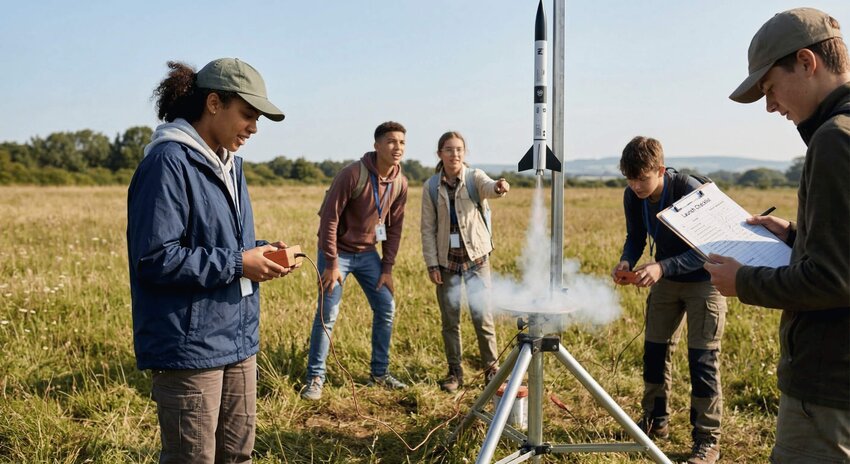
- Actual launch of the rocket built by the participants themselves
The launch is not simulated. The rocket is effectively launched. In addition, each participant creates a clay model during the program, an activity that develops the ability to transform engineering concepts into physical form, a skill widely used in the aerospace and automotive industries.
Which companies do the participants visit during the summer camp?
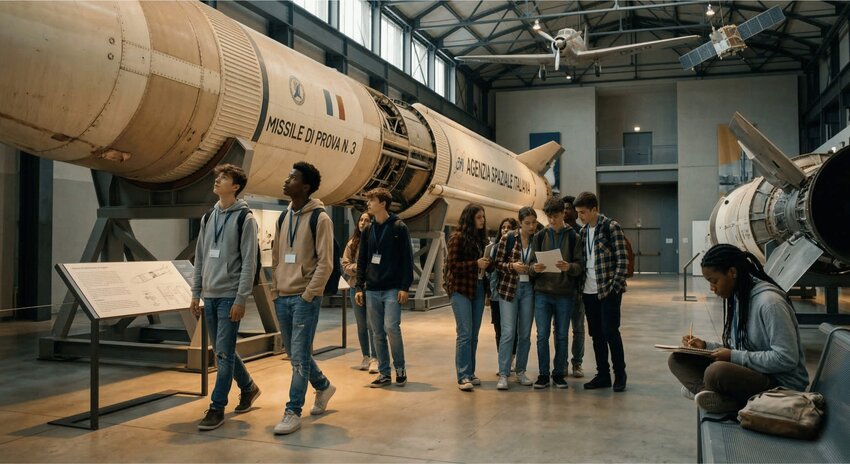
Technical visits are one of the most valued elements of the program and are part of the official schedule. They bring participants into direct contact with the aerospace and advanced engineering market in a way that rarely happens in programs for teenagers.
Leonardo S.p.a.: one of the largest aerospace, defense and security technology companies in the world, with a presence in more than 150 countries. It develops everything from satellites to air navigation systems and embedded electronics. The visit allows young people to talk to engineers who work on a daily basis with the problems discussed in the modules.
Pagani Automobili: recognized worldwide for advanced materials engineering, aerodynamics and performance. The visit isn't about luxury cars. It's about the mentality of seeking technical excellence in every detail of a project, a principle that underpins aerospace engineering.
Italdesign & Museum: one of the most influential industrial design and engineering studios in the history of motoring. The visit connects participants to the process of transforming engineering concepts into real products, from the prototype to the final scale.
What is included in the residential program?
The residential regime is a structural element of the summer camp, not a logistical detail. The daily coexistence between young people from different countries within a high-level technical environment produces a type of learning that does not take place in face-to-face programs with a return home at the end of the day.
Everything included in the program:
- Accommodation for 13 nights (Sunday to Saturday)
- 3 meals a day
- Insurance for the entire period
- Staff support 24 hours a day, 7 days a week
- Classes, laboratories, and practical activities for the three modules
- Visits to Leonardo S.p.a., Pagani Automobili and Italdesign & Museum
- Actual launch of the prototype rocket
- Creation of a clay model
- Certificate of completion issued by the program
The certificate represents participation in a high-level engineering program based at the facilities of the School of Aerospace Engineering at Sapienza University of Rome. It has real weight in applications for universities and international selection processes.
For parents seeking more context about what differentiates this type of program from a conventional language exchange, the Be Easy's aerospace engineering program gathers all the detailed information, including the registration process.
Who is the aerospace engineering summer camp suitable for?
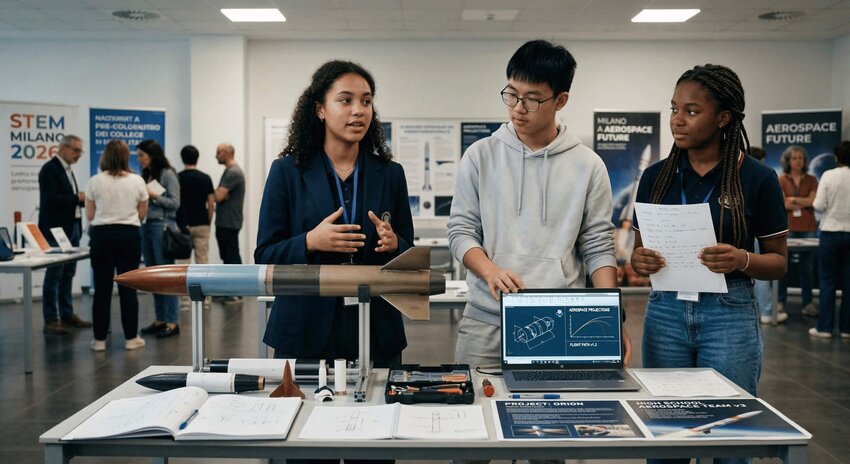
The program was developed for young people aged 15 to 18 with an interest in engineering, science, technology, or space. It does not require any previous technical knowledge.
It is not necessary to have studied advanced physics. You don't need to know how to program. Prior experience with electronics is not required. The program builds on the fundamentals and progresses progressively over the two weeks.
The language is English, but all levels are accepted. Daily immersion in an environment where the language is used naturally is, in and of itself, a significant advance for those who are basic or intermediate.
The program is recommended if the young person:
- Are you interested in engineering, physics, programming, or space exploration
- Do you want to explore a technical area before defining a career at the university?
- Looking for an international experience other than a language exchange
- Do you want to build a curriculum and portfolio that stands out in university selections?
- He is between 15 and 18 years old and is willing to challenge himself for two weeks in a real laboratory
For parents: this program offers the chance for the child to test a highly technical area under real conditions, with full support, before any long-term academic commitment. It's career planning with practice, not theory.
How does the summer camp in Rome compare to other aerospace programs for teenagers in Europe?
The market for rocket camps and engineering programs for teenagers has grown in recent years, especially in Europe. But most programs have a different profile than what Be Easy offers in Rome.
The central difference lies in three combined elements that rarely appear together:
- Real institutional base: The program takes place within the Sapienza School of Aerospace Engineering, not in a rented space or convention center
- Direct industrial access: visits to Leonardo, Pagani and Italdesign are not a complementary tour. They are part of the grid and bring young people into contact with active professionals in the sector
- Actual release: The rocket built by the participants is actually launched, not just designed or simulated
These three elements together build the profile that high-level university programs and international selection processes recognize. A young man who spent two weeks building and launching a rocket at Sapienza arrives at the university with concrete references that his colleagues will take years to develop.
The global aerospace sector is booming. Starting to build that profile at 15 or 17 years old is a long-term advantage that is difficult to replicate later.
Summer 2026 dates and how to secure the vacancy
The next class of the aerospace engineering summer camp in Rome will take place during the Summer 2026:
July 19 to August 1, 2026, in Rome, Italy
The residential regime with laboratories and prototype development requires small groups and close monitoring of each participant. Spaces are limited by the program's own design.
International travel planning for teenagers has a natural time of organization: documentation, visa, ticket, and personal preparation. Starting the registration process in advance is what guarantees the vacancy and avoids unforeseen events.
Recommended steps for those considering enrollment:
- Confirm that the young person meets the age profile (15 to 18 years old)
- Contact Be Easy to understand the complete process
- Organize documentation in advance (visa, passport, insurance)
- Book the ticket after the confirmation of the seat
Be Easy takes care of all the logistical and bureaucratic aspects, from guidance on documentation to follow-up on the day of arrival in Rome.
FAQs
Does my child need to know advanced English to participate in summer camp in Rome?
No. The program accepts participants of all levels of English. Daily immersion in the language represents a concrete step forward for those who are in the basics or intermediate.
What age group is accepted for the aerospace engineering summer camp?The program is aimed at young people aged 15 to 18. Prior technical knowledge in engineering, programming, or physics is not required.
Is the certificate of completion internationally recognized?The certificate is issued by the program and refers to the training carried out at the facilities of the School of Aerospace Engineering at Sapienza University of Rome. It is a concrete differential in university applications and international selection processes.
What does Be Easy include in support other than enrollment in the program?Be Easy guides the family through all the documentation, including the visa to enter Italy, and accompanies the planning process upon arrival in Rome. Staff support remains available throughout the program period.
Be Easy: from planning to rocket launch in Rome
At Be Easy, we accompany each stage of the process so that the young person arrives in Rome with everything resolved: documentation, visa, logistics and support during the program. With over 200 international educational partnerships, we connect families to real programs at top-tier institutions. To learn more about vacancies for Summer 2026 and start planning, contact us.

