
Aerospace engineering summer camp for young people: how does rocket launching work?
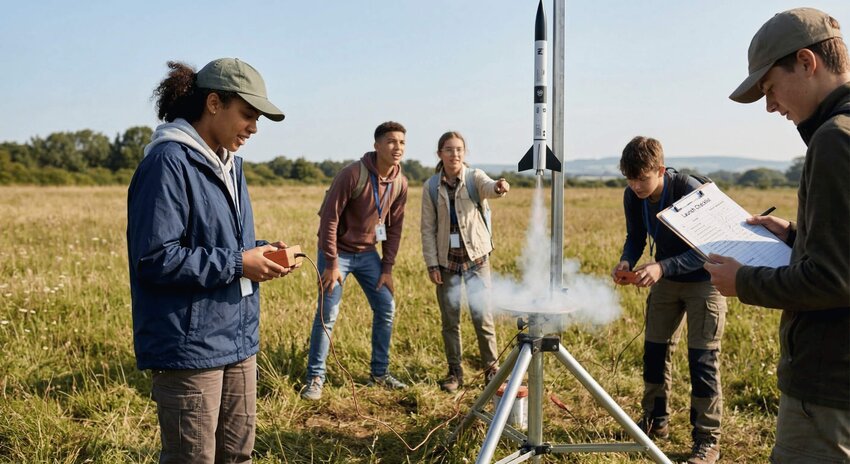
Build a functional rocket as a team, calculate trajectory, adjust the prototype, and watch the launch actually take place. It's not a simulation, it's not a video, it's not a school experiment with vinegar and baking soda. This is what the participants in the Be Easy Aerospace Engineering Program do in the final stretch of the two weeks in Rome.
The third module of the program, called Rocket Prototype Development & Launch, is the point of arrival of everything that was learned before: the fundamentals of propulsion, embedded systems, trajectory simulations. Here, everything becomes a physical prototype. And then it becomes a release. In this article, you will understand how this module works in practice, what young people do every day and what makes this stage especially remarkable for those who want to pursue a career in engineering.
What is the Rocket Prototype Development & Launch module?
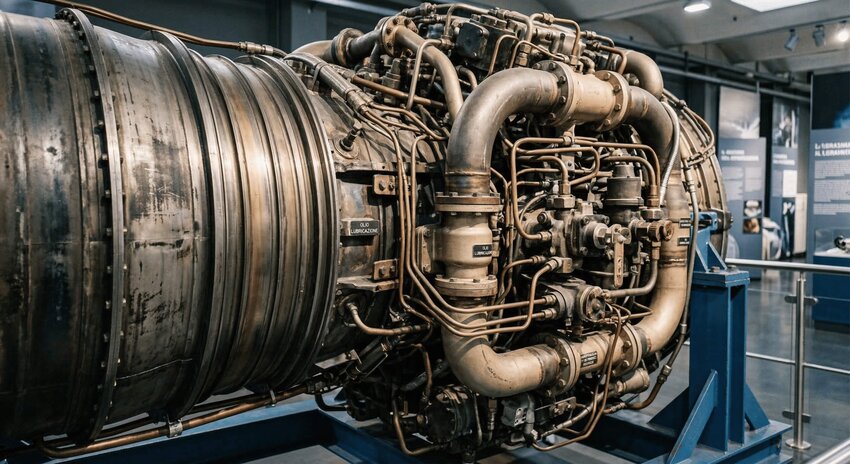
The third and final technical module of the residential program at Sapienza University of Rome is dedicated to the complete development of a small-scale rocket, from design to launch.
Participants work in multidisciplinary teams. Each group is responsible for a functional prototype, from structural design to assembly of propulsion systems. The module is guided by the same teachers and researchers from the Sapienza School of Aerospace Engineering who conduct the two previous modules, ensuring technical continuity throughout the program.
The process follows a clear sequence:
- Review of the propulsion design developed in Module 1
- Application of the trajectory simulation data from Module 2
- Physical construction of the prototype in a university laboratory
- Structural integrity tests and system verification
- Actual rocket launch
There are no shortcuts. Each stage depends on the previous one, which makes the module a natural synthesis of the entire immersion.
How does rocket construction work in practice?
What do young people do in the laboratory?
When they enter the construction phase, participants already arrive with solid technical references. In the module of Rocket Engineering and Propulsion, they studied applied thermodynamics, motor types, and thrust calculations. In the module of Space Mission Simulation, simulated trajectories and programmed systems with Arduino. Now they apply that knowledge to something physical.
Within the Sapienza laboratory, the teams work with:
- Real structural materials (fiberglass, aluminum, technical polymers)
- Certified model propulsion engines for academic use
- Manufacturing and assembly tools under technical supervision
- Stability control and pressure center systems
The job isn't just “putting together a kit”. Participants need to make engineering decisions as a group: what will be the angle of the stabilization fins? How to distribute the weight to ensure a predictable trajectory? These are real questions, with a direct impact on the outcome of the launch.
Who guides the teams during construction?
Technical guidance comes from professors and researchers associated with the School of Aerospace Engineering at Sapienza University of Rome, founded in 1303 and recognized as one of the largest universities in Europe. The program does not use third-party instructors or generic facilitators: the knowledge comes from within a cutting-edge academic institution, with an active research structure in propulsion and flight dynamics.
How is the launch day?
The release is the show's most awaited moment. It's also the most revealing: projects with miscalculations or assembly errors will show this on the air, and that's exactly where learning deepens.
The process on the launch day follows well-defined technical steps:
- Final check: each team reviews the prototype before launch with a technical checklist
- Ignition system preparation: connecting the propulsion engine and setting up the firing system
- Supervised release: performed in an open area under the supervision of instructors
- Flight analysis: shortly after launch, the teams discuss the behavior of the rocket, the altitude reached and possible trajectory deviations
- Technical report: each group records the results and compares them with the simulations performed in the previous module
What makes this moment special isn't just the adrenaline rush of watching the rocket come out of the ground. It's the perception that every decision made over the previous two weeks was connected to what happened in those seconds. For many participants, this is the first time they have experienced the complete engineering cycle in practice: theory, design, construction, testing, and result analysis.
Why does this experience matter for an aerospace career?
What goes into the curriculum after the program?
Upon completing the launch module, the participant can include a documented technical experience in the curriculum:
- Development and launch of a small-scale rocket in a university laboratory
- I work in an international academic environment (Sapienza University of Rome)
- Practical application of propulsion concepts, embedded systems, and flight dynamics
- Certificate issued by the Be Easy residential program
For applications to engineering universities abroad, this type of practical experience weighs in a concrete way. Selection committees for aerospace engineering programs in Europe and the USA value candidates who are able to demonstrate real contact with the area before graduation.
What's the difference between launching a rocket on the show and at a science fair?
The difference lies in the technical base, the environment, and the level of rigor.
At a science fair, the primary purpose is to demonstrate a principle. In the Sapienza program, the objective is to apply real engineering: to calculate, simulate, build, test, and analyze with technical criteria. Participants use the same conceptual tools that engineers use in professional settings, even if on a small scale.
In addition, the program includes an exclusive visit to Leonardo S.p.a., an Italian aerospace company and one of the largest in Europe in the defense and space exploration sector. This visit puts young people in direct contact with the professional environment where rockets, satellites, and propulsion systems are developed on an industrial scale. It's the connection between what they did in the lab and where it might go.
What do parents need to know about the launch module?
Is the launch safe?
Yes. The program uses certified model propulsion engines, used specifically in academic and educational settings. The launch takes place in a supervised open area, following protocols established by the Sapienza technical team. All activity takes place within the program's residential schedule, with 24-hour support and insurance included.
Does my child need to have prior technical knowledge to participate?
It is not necessary to come to the program with in-depth technical knowledge. The program is designed for teenagers from 15 to 18 years old with an interest in engineering and space, but without requiring prior training. Modules 1 and 2 build the necessary technical repertoire before the launch module.
What helps is having genuine curiosity, a willingness to work as a team, and an interest in solving practical problems. The rest is taught over the two weeks.
How does module 3 connect to the other modules of the program?
The program is structured as an intentional technical progression. Anyone who wants to understand the propulsion basis learned in module 1 can follow the article on Rocket Engineering & Propulsion. Anyone who wants to see how trajectory simulations with Arduino work before launch can read the article on Space Mission Simulation.
Each module was designed to feed the following. The launch only makes complete sense when the young man arrived at it based on the previous modules. This is what differentiates the program from an isolated activity: it is a structured formation, not a series of loose experiences.
FAQ
1. What is the rocket launch experience in the Be Easy program?
It is the final module of the residential program in Rome, where participants build a prototype rocket in the laboratory and carry out the actual launch, applying the propulsion and simulation knowledge developed in the previous modules.
2. Are young people without technical experience able to participate in the launch module?
Yes. The program is built progressively: the first two modules teach the fundamentals necessary for all participants to arrive prepared for the construction and launch phase.
3. Is the Rome Teenage Real Rocket Launch supervised by professionals?
Yes. The entire activity is supervised by professors and researchers from the School of Aerospace Engineering at Sapienza University of Rome, with specific safety protocols for the use of certified engines.
4. What does the young person receive upon completing the program?
Certificate of completion issued by the residential program, in addition to having in the curriculum a documented practical experience of developing and launching a rocket prototype in an international university environment.
5. What is the difference between launching a rocket at Sapienza compared to similar programs?
The academic base is the main differential. The program is conducted within a university with active research in aerospace engineering, with guidance from real researchers and university laboratory infrastructure, not a generic summer campus.
Be Easy
The Be Easy Aerospace Engineering Program takes place from July 19 to August 1, 2026, in Rome, in residential format with lodging, three meals a day, insurance, 24-hour support and certificate of completion. Spaces are limited. If you want to know more about the program, the dates, and the registration process, contact us!

