
Aerospace engineering exchange: how young people from 15 to 18 years old simulate space missions with Arduino in Rome
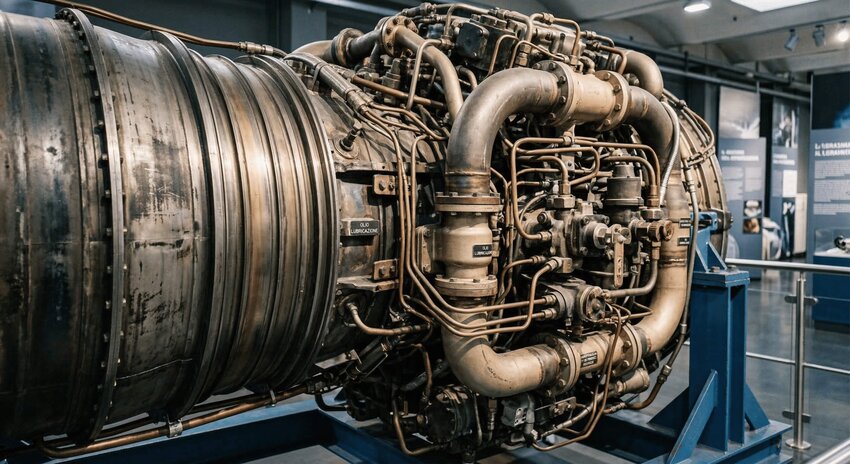
Programming a system that simulates the trajectory of a rocket is not an exercise in science fiction. This is exactly what teenagers from 15 to 18 years old do in the second module of the Be Easy Aerospace Engineering Program, in Rome, with hardware platforms such as the Arduino.
If your child is interested in space, robotics, or electronics, this article was written for them and for you. We will explain what space mission simulation is, how the Arduino fits into this equation, what young people learn in practice at Sapienza University of Rome, and why this module is a turning point for those thinking about pursuing a career in aerospace engineering, computer science or embedded systems.
What is space mission simulation and why should teenagers learn it?
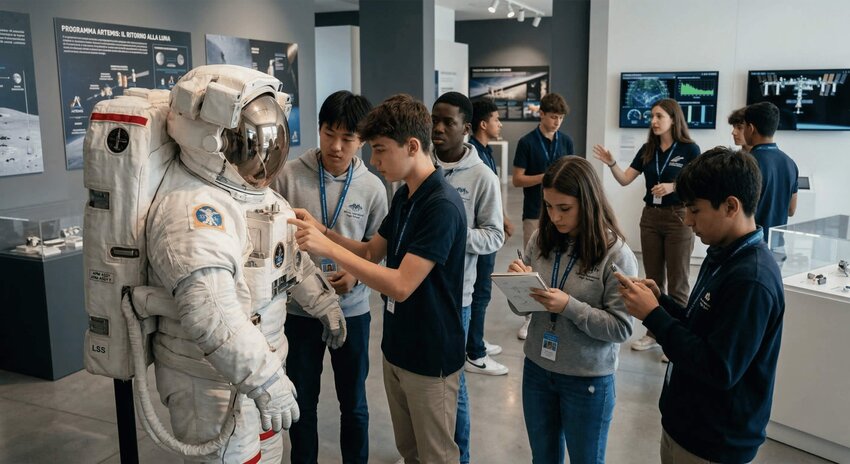
Before a rocket is launched, engineers spend months, sometimes years, simulating each phase of the mission in a controlled environment. They calculate trajectories, test control systems, identify possible faults, and correct the design before any physical part is built.
The simulation of space missions is therefore one of the most central skills in modern aerospace engineering. It is not an auxiliary stage: it is the heart of the development process of any vehicle or satellite.
For teenagers aged 15 to 18, learning the fundamentals of this discipline is a concrete advantage. They arrive at university with a practical base that most engineering students will only develop in their third or fourth year of graduation. And they arrive with a technical language, both in terms of concepts and in English, that differentiates any curriculum.
What makes this learning different from an online course?
The difference is in the environment and in the depth.
- Online courses teach concepts in isolation, without a physical or collaborative context.
- Laboratory simulations put young people in front of real hardware, real errors, and real engineering decisions.
- Working as a team with young people from other countries simulates, in advance, the real professional environment of any large company in the aerospace sector.
In Module 2 of the program, participants do not attend a presentation on embedded systems. They program one.
How does the Space Mission Simulation & Embedded Systems Module work?
It is built on what was learned in Module 1 of Rocket Engineering & Propulsion. Young people have already arrived with the fundamentals of propulsion, flight physics, and aerodynamics. Now, the challenge is to simulate a complete mission and program the systems that would make that mission work.
The module activities are organized on two main fronts:
- Trajectory simulation: participants work with mathematical models and simulation tools to calculate the path of a rocket from launch to target altitude, considering variables such as aerodynamic drag, thrust, and mass.
- Embedded systems with Arduino: young people program microcontrollers to perform real functions of an aerospace control system, such as reading sensors, processing data in real time, and sending response signals.
The two fronts are connected in the final design of the module: a functional system that simulates, on a reduced scale, the control behavior of a real space mission.
What is Arduino and why is it used in this context?
Arduino is an open-source hardware and software platform designed to facilitate the development of embedded systems. It is used by engineers, researchers, and students around the world, from robotics to the automotive industry, to space exploration.
For the program of outdoor space simulation in Rome, the Arduino plays a strategic role: it allows teenagers without previous experience in electronics to learn the logic of embedded systems in a practical and progressive way, without having to master complex programming languages from the start.
What young people do with Arduino in the program:
- Connect pressure, temperature, and acceleration sensors to the microcontroller
- They write code to collect and process the data from these sensors in real time
- They program simple decision logics (without pressure X, then action Y) that replicate the behaviors of real control systems
- They integrate the data obtained with the trajectory simulations performed in the first part of the module
In the end, the young man has in his hands a functional system that he designed, programmed and tested himself. For many, it's the first time in their lives that a code they wrote controls something physical in the real world.
What your child learns in practice: module 2 technical skills
This module is deliberately multidisciplinary. It combines physics, mathematics, programming, and systems engineering in a single practical project, making it especially a trainer for young people who are still discovering what area of science or technology they want to specialize in.
Programming logic and computational thinking
Arduino is programmed in C++, one of the most used languages in industrial embedded systems. Participants do not need to have previous experience: the module starts with the fundamentals and progresses progressively.
The most important thing is not the language itself, but the reasoning it develops: how to structure a problem, how to break down a complex task into simple steps, how to test hypotheses and correct errors in a systematic way. This reasoning is the core of computational thinking and has direct application to any technical career, far beyond programming.
Fundamentals of embedded systems
For adolescent embedded systems, this module is a concrete gateway to one of the most promising areas of engineering. Embedded systems are in just about everything: satellites, cars, planes, medical devices, smartphones, and smart appliances.
Understanding how a microcontroller interprets signals from the physical world, processes information, and emits responses is a skill in high demand in the global labor market. Adolescents who have this contact early arrive at engineering schools with a significant technical development advantage.
Computer simulation of trajectories
The trajectory simulation part brings young people into contact with real mathematical models. They learn to use physical parameters, such as initial velocity, launch angle, drag coefficient, mass, and thrust, to calculate the predicted behavior of a rocket in flight.
This work requires direct application of mathematics and physics in a real context, which transforms content that often seems abstract at school into concrete problem solving tools. Many participants report that, after the program, they start to see school subjects in a completely different way, because now they know what they are for.
Teamwork and technical communication in English
The program is conducted in English and brings together young people from various countries. Working in a multidisciplinary and multicultural team is not a logistical detail: it's part of learning.
In the global aerospace market, teams are always international. Brazilian engineers who work at ESA, Airbus or SpaceX communicate in English and collaborate with colleagues from dozens of nationalities. The module prepares young people for exactly that environment, in a practical way, even before graduation.
Why are Rome and Sapienza the right place for this learning?
The choice of location is not random. The Be Easy aerospace engineering exchange takes place at Sapienza University of Rome for solid technical and academic reasons.
Sapienza, founded in 1303, is one of the largest universities in Europe and has one of the most active aerospace engineering schools on the continent. Its teachers and researchers collaborate with the European Space Agency (ESA) and with large companies in the sector. Module 2 of the program is developed within this environment, with actual university laboratory infrastructure, not in a rented event room.
For parents, this has a direct meaning: the child learns space mission simulation and Arduino systems within an institution that does this as cutting-edge research. The teaching standard reflects this context.
Program partners that expand the experience
In addition to the activities at Sapienza, the program includes exclusive visits that connect module learning to the real industrial world:
- Leonardo S.p.a.: one of the largest aerospace and defense technology companies in the world, with headquarters in Italy. Young people see up close how embedded systems and simulation technologies are used in real defense and space exploration projects.
- Pagani Automobili: visit to the state-of-the-art supercar factory, which shows how the same principles of material and system engineering are applied in the high-performance automotive sector.
- Italdesign & Museum: connects industrial design and technological innovation, expanding young people's vision of how engineering relates to other creative disciplines.
These visits are not tours. They are pedagogical extensions of the program: moments in which the content learned in the laboratory takes shape and meaning in the real world.
How does module 2 fit into the program progression?
The Be Easy Aerospace Engineering Program is structured in three modules that form an intentional pedagogical sequence. Each stage prepares the youngster for the next.
- Module 1: Rocket Engineering & Propulsion: fundamentals of physics, propulsion, and aerodynamics. The young person learns how a rocket works and understands the forces acting on it in each phase of the flight.
- Module 2: Space Mission Simulation & Embedded Systems: trajectory simulation and programming with Arduino. The young person applies the concepts of module 1 to computational models and controllable physical systems.
- Module 3: Rocket Prototype Development & Launch: building and launching a real rocket. The young man uses everything he learned in the previous modules to design, assemble and launch a rocket with a complete technical background.
This progression is what differentiates this program from isolated workshops or weekend courses on robotics. Young people don't learn disconnected concepts: they build an integrated technical repertoire, which makes sense as a whole and that prepares them for the reality of working in engineering.
For parents: what does this module develop in your child besides the technique?
The technical dimension is clear. But Module 2 also develops transversal skills that have value in any professional area.
Error tolerance and persistence
Programming an embedded system and seeing it fail, understanding why it failed and how to correct it is one of the most formative experiences a young person can have. The laboratory environment normalizes the error as part of the process, not as a failure. That's a mindset that most young people don't develop in conventional school environments.
Intellectual autonomy
In the module, each team makes real project decisions. There's no right answer in the manual. Young people need to analyze data, discuss options with the team, and defend their choices. This develops intellectual autonomy, the ability to think independently and take responsibility for one's own reasoning.
International-level reference
Living and working with young people from other countries with the same level of interest and dedication is an experience that calibrates young people's perception of themselves. Many participants return with a much clearer sense of what level they are at, what they need to develop, and what they are already capable of. This clarity has a direct impact on the motivation and direction of studies in Brazil.
Space mission simulation young people: who benefits the most from this module?
This module is especially suitable for young people who already have some interest in at least one of the following areas:
- Programming or robotics (even if introductory)
- Physics or mathematics with a focus on practical application
- Space exploration, rockets, or aerospace technology
- Electronics, Arduino, or control systems
- Computer Science or Systems Engineering
Prior experience in all of these areas is not required. The program is structured to receive young people at different stages of technical development. What matters is genuine curiosity and a willingness to work intensively for two weeks.
For young people who are still not clear about which area to follow, the module works as a practical mapping: by working with simulation, programming, and physical systems at the same time, many discover affinities they didn't know they had.
The program in numbers: what is included in Summer 2026?
The Aerospace Engineering Program takes place from July 19 to August 1, 2026, under a full residential basis. Check out what's included:
- 13 nights' accommodation in Rome
- 3 meals a day for the entire stay
- Access to all three technical modules at Sapienza University of Rome
- Exclusive visits to Leonardo S.p.a., Pagani Automobili and Italdesign & Museum
- Travel insurance for the entire duration of the program
- 24-hour support with dedicated Be Easy team
- Certificate of completion at the end of the program
Be Easy Exchange, with more than 200 international partnerships, takes care of all logistics, from planning to arrival in Rome, so that parents are safe and young people can fully focus on learning.
FAQ: frequently asked questions about the simulation module and Arduino
1. Does my child need to know how to program to participate in the Arduino module?No. The module begins with the fundamentals of C++ programming and progresses gradually. The most important thing is to be curious and willing to learn. Young people with no previous programming experience participate and complete the module with concrete results.
2. Does the Space Mission Simulation module cover advanced mathematics content?The module uses mid-level mathematics: algebra, trigonometry, and basic concepts of vector physics. Sapienza teachers adapt the depth to the group's profile, ensuring that participants follow through without requiring university technical training.
3. How does this module connect to the choice of course at the university?Contact with computer simulation, embedded systems, and programming helps young people assess their affinity with areas such as aerospace engineering, control and automation engineering, computer science, and electrical engineering. Many participants report that the module was decisive for the choice of the course.
4. Does the program certificate have value at universities outside Brazil?The certificate is issued based on the program carried out at Sapienza University of Rome, one of the most recognized universities in Europe. Although the formal value varies by institution, the academic weight and relevance of the Sapienza name are recognized internationally, especially in selection processes for engineering courses.
5. Can my child participate without Arduino or electronics experience?Yes. The module is designed for young people with different levels of technical experience. The instructors conduct the learning progressively, ensuring that even those who have never touched an Arduino leave the module with a functional project developed on their own.
Be Easy Exchange: how to guarantee a place in the program
Be Easy Exchange structures and monitors every detail of the Aerospace Engineering Program in Rome, from the selection of participants to the complete travel and stay logistics, so that parents have peace of mind and young people can make the most of the two weeks at Sapienza. Vacancies for Summer 2026 are limited and the demand for the program is growing with each edition. If you want to guarantee your child's participation, contact us!

